

Your Professional Server Cabinet Supplier
SinoLaser Technology Co., Ltd., founded in 2009 and located in Suzhou, Jiangsu Province, China-just a short distance from the international metropolis of Shanghai-is a professional manufacturer specializing in high-precision sheet metal fabrication. We provide comprehensive sheet metal solutions across industries such as machinery manufacturing, electronics, telecommunications, and automation.we are committed to becoming a leading global supplier and a trusted long-term partner in the sheet metal fabrication industry.
-
![Server Rack Cabinet Enclosure]() Server Rack Cabinet EnclosureThe Server Rack Cabinet Enclosure is a robust, versatile, and fully customizable housing solution for IT infrastructure. Designed for data centers, telecom rooms, industrial server rooms, and officeread more
Server Rack Cabinet EnclosureThe Server Rack Cabinet Enclosure is a robust, versatile, and fully customizable housing solution for IT infrastructure. Designed for data centers, telecom rooms, industrial server rooms, and officeread more -
![42U Server RACK Cabinet]() 42U Server RACK CabinetThe 42U Server Rack Cabinet is a heavy-duty, fully customizable enclosure designed for enterprise data centers, telecom hubs, industrial server rooms, and office IT infrastructure. It providesread more
42U Server RACK CabinetThe 42U Server Rack Cabinet is a heavy-duty, fully customizable enclosure designed for enterprise data centers, telecom hubs, industrial server rooms, and office IT infrastructure. It providesread more -
![Network Server Cabinets]() Network Server CabinetsOur Network Server Cabinets are engineered to provide secure, organized, and efficient housing for networking equipment, servers, and other IT devices. Designed for enterprise networks, telecomread more
Network Server CabinetsOur Network Server Cabinets are engineered to provide secure, organized, and efficient housing for networking equipment, servers, and other IT devices. Designed for enterprise networks, telecomread more -
![19‑inch Server Rack Cabinet]() 19‑inch Server Rack CabinetThe 19‑inch Server Rack Cabinet is a highly reliable and versatile enclosure designed to organize, protect, and optimize networking and server equipment. Ideal for data centers, telecom rooms,read more
19‑inch Server Rack CabinetThe 19‑inch Server Rack Cabinet is a highly reliable and versatile enclosure designed to organize, protect, and optimize networking and server equipment. Ideal for data centers, telecom rooms,read more -
![Custom Server Cabinets]() Custom Server CabinetsOur Custom Server Cabinets provide tailored housing solutions for servers, networking devices, storage units, and other IT equipment. Designed for data centers, enterprise networks, telecom rooms,read more
Custom Server CabinetsOur Custom Server Cabinets provide tailored housing solutions for servers, networking devices, storage units, and other IT equipment. Designed for data centers, enterprise networks, telecom rooms,read more


Why Choose Us
Production Market
SinoLaser Technology Co., Ltd.'s products are exported to key markets worldwide, primarily including Europe, America, Southeast Asia, the Middle East, and Africa.
Quality Assurance
Adheres to international quality management systems, with unconditional rework for any quality issues to safeguard customer interests and product reliability.
Professional Team
Our professional R&D team continuously drives technological innovation to meet the evolving needs of our clients.
Our Service
SinoLaser Technology Co., Ltd. upholds the service philosophy of "Customer First," providing comprehensive pre-sales, in-sales, and after-sales support to ensure the best customer experience and satisfaction.
Space optimization By consolidating equipment into a centralized, vertical structure, server cabinets maximize floor space and improve the overall organization of the data center.
Enhanced cooling efficiency The structured layout and airflow management features help maintain an optimal temperature, reducing the risk of overheating and prolonging the lifespan of the equipment.
Improved security
Lockable doors and panels safeguard critical infrastructure, ensuring only authorized personnel can access the hardware.
Simplified maintenance
Easy access to equipment and organized cabling streamline troubleshooting, upgrades, and routine maintenance, minimizing downtime.
Scalability
Server cabinets can be easily integrated into existing setups and expanded as the data center grows, providing a flexible solution for evolving infrastructure needs.
Specification
|
Dimensions |
Depth 450mm*width 427mm*height 177mm |
|
Material |
Environmentally friendly, fingerprint resistant 1.2mm SGCC |
|
HDD Bay |
4* 3.5" hard drive slots (Compatible with 1 2.5" SSD) |
|
Cooling Fan |
1* 12025Fan |
|
Epansion space |
7 PCI/PCIE full-height expansion slots |
|
Motherboard |
Supports motherboards with dimensions of 12"×9.6" and below |
|
Color |
Computer White |
|
Power Supply |
Standard ATX power supply |
|
System Control |
POWER LED*1, HDD LED*1, RESET SW*1, POWER SW*1 |
Server Cabinet Features

Standardized sizes
Server cabinets typically adhere to industry-standard sizes, with the most common being 19 inches wide. Heights are measured in rack units (U), where 1U equals 1.75 inches. Common heights include 42U, 45U, and 48U.

Ventilation and cooling
Proper ventilation and cooling mechanisms, such as perforated doors and built-in fans, are integral to preventing overheating and ensuring optimal performance of the equipment.

Cable management
Server cabinets are equipped with cable management systems, including cable rings, hooks, and channels, to organize and route cables neatly, reducing clutter and enhancing airflow.
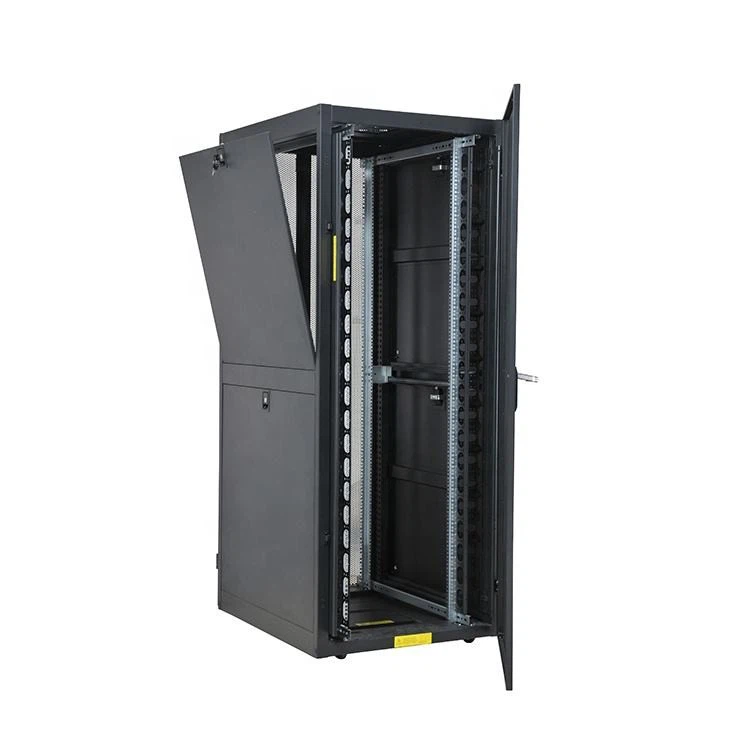
Security
Most server cabinets come with lockable doors and side panels to prevent unauthorized access and protect sensitive equipment from tampering or theft.
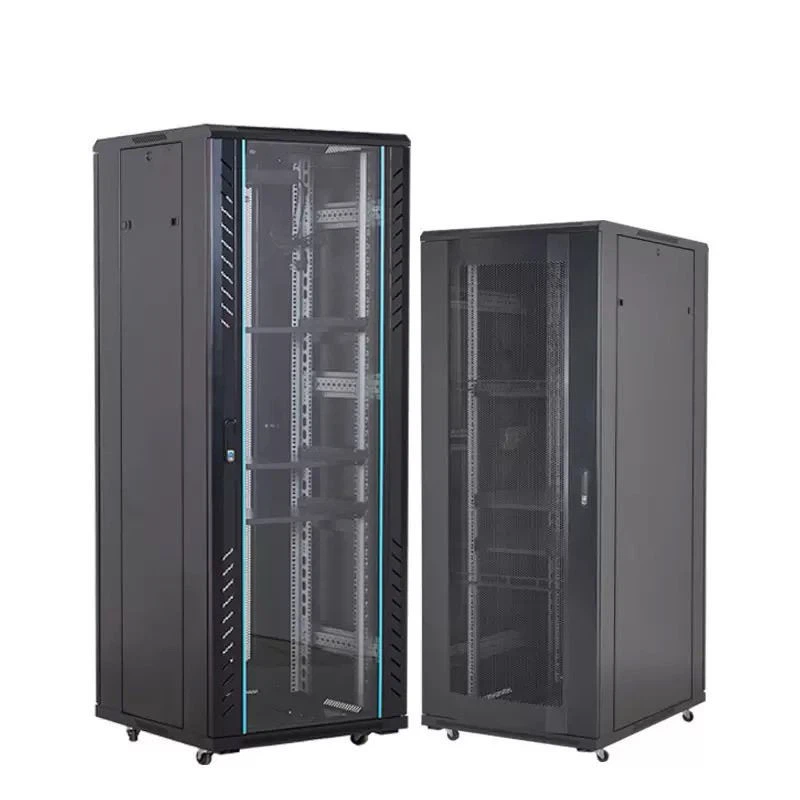
Power distribution
They often house rack PDUs to provide and manage power supply to the IT equipment, ensuring consistent and reliable power delivery.
Accessibility
Designed for ease of access, server cabinets feature removable side panels and doors, as well as slide-out shelves, making maintenance and upgrades more convenient.
Installation Best Practices of Server Cabinet
Location Selection:
Choose a location with adequate ventilation and away from direct sunlight or excessive heat sources. This helps keep the equipment cool and functional.
01
Leveling the Cabinet:
Use a level to ensure the cabinet is firmly positioned. This can prevent tipping and ensures stability for the equipment housed within.
02
Secure Mounting:
For wall-mounted cabinets, ensure that they are securely anchored to the wall studs to support the weight of the equipment.
03
Organized Wiring:
Implement a structured approach for cable routing to avoid tangles and ensure easy access when adjustments or repairs are necessary. This may also include using cable trays or ties for neatness.
04
Regular Maintenance Checks:
After installation, schedule periodic checks to ensure that all components are functioning correctly and that airflow remains unobstructed.
05
Components of Server Cabinet
Rack Frame
The rack frame is the structural backbone of the network cabinet. It typically comes in standardized sizes, such as 19 inches in width for server racks. The height of the rack, measured in rack units (U or RU), varies but is commonly 42U or 45U.
Mounting Rails
Inside the rack frame, you'll find mounting rails that allow you to secure networking equipment, servers, and other hardware. These rails are adjustable, making it easy to accommodate different-sized devices.
Cable Management
Effective cable management is crucial in maintaining an organized and functional network cabinet. Cable management components include cable trays, horizontal and vertical cable managers, and cable ties.
Power Distribution
Power distribution units (PDUs) are essential components inside network cabinets. They distribute electrical power to the various devices and servers housed within the cabinet.
Cooling and Ventilation
To prevent equipment from overheating, network cabinets are equipped with cooling and ventilation systems. These can include fans, air conditioning units, and perforated doors or side panels to promote airflow.
Security Features
Security is paramount in professional network cabinets. These cabinets typically come with lockable doors and side panels to prevent unauthorized access. Biometric locks, access control systems, and environmental sensors further enhance security by monitoring cabinet access and environmental conditions.
Rack-Mountable Hardware
Network cabinets house a variety of rack-mountable hardware, including servers, switches, routers, patch panels, and storage devices. These components are securely mounted in the cabinet and connected to form the network infrastructure.
Backup Power
In mission-critical environments, backup power solutions like uninterruptible power supplies (UPS) are often included within network cabinets.
Cable Entry and Exit Points
Network cabinets feature strategically placed cable entry and exit points to facilitate cable routing to and from the cabinet. These entry points are equipped with cable glands or brush strips to maintain the cabinet's integrity and prevent dust and debris from entering.
Application of Server Cabinet
Data Centers
Protects and organizes servers, routers, switches, and other networking components in large-scale IT infrastructures.
Telecommunications
Safeguards telecom equipment, ensuring reliable operation while keeping cables and components neatly organized.
Edge Computing
Perfect for small, remote server installations, offering flexible configurations to meet the unique needs of edge data centers.
Enterprise IT Systems
Provides secure storage and organization for IT hardware in corporate environments, allowing for easy access and efficient management.
FAQ
We're well-known as one of the leading server cabinet manufacturers and suppliers in China. Please feel free to buy high quality server cabinet at competitive price from our factory. Contact us for free sample and cheap products.
1u rack enclosure, Custom Server Cabinets, lockable rack mount enclosure