

Installing solar panel ground mount racks in windy locations demands careful planning and execution to ensure the system's stability, durability, and long - term performance. As a supplier of Solar Panel Ground Mount Rack, we have extensive experience and knowledge in this field. In this blog, we will discuss the best practices for installing solar panel ground mount racks in windy areas.
Site Assessment
The first and most crucial step is a thorough site assessment. Wind speed is not uniform across a region, and local topography can significantly affect wind patterns. For instance, areas near large bodies of water or on hilltops tend to experience higher wind speeds. Use anemometers to measure the average and peak wind speeds at the site over an extended period, preferably a year. This data will help you determine the appropriate design and installation methods for the ground mount rack.
In addition to wind speed, consider the soil type at the installation site. Soft or sandy soils may require different foundation techniques compared to hard, compacted soils. Conduct soil tests to understand its bearing capacity, which is essential for ensuring that the ground mount rack remains stable under high - wind conditions.
Selecting the Right Materials
The choice of materials for your solar panel ground mount rack is vital in a windy location. Opt for high - quality Solar Panel Steel Parts that are corrosion - resistant. Galvanized steel is a popular choice as it offers excellent strength and durability. The steel should be thick enough to withstand the wind forces without bending or breaking.
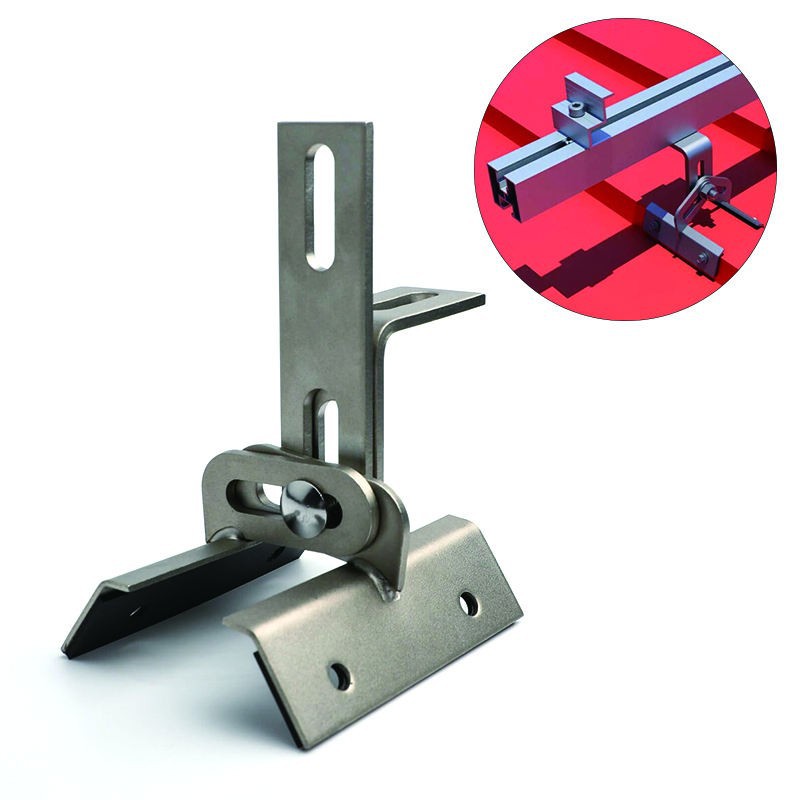
Aluminum is also an option, especially for its lightweight and corrosion - resistant properties. However, ensure that the aluminum alloy used is strong enough to handle the wind loads in your area. The Solar Panel Mounting Frames should be designed to securely hold the solar panels in place, preventing them from being dislodged by strong winds.
Foundation Design
A proper foundation is the key to a stable solar panel ground mount rack in a windy location. There are several foundation options available, and the choice depends on the soil type and wind conditions.
Concrete Foundations
Concrete foundations are a reliable option for high - wind areas. They provide a solid base for the ground mount rack. You can use pre - cast concrete blocks or pour in - situ concrete footings. The size and depth of the concrete foundations should be calculated based on the wind loads and the soil bearing capacity. For example, in areas with very high wind speeds and soft soils, deeper and larger footings may be required.

Helical Piles
Helical piles are another effective foundation solution. They are screwed into the ground, providing excellent resistance to uplift and lateral forces. Helical piles are suitable for a wide range of soil types and can be installed quickly. The diameter and length of the helical piles should be selected according to the wind and soil conditions at the site.
Ballasted Foundations
Ballasted foundations use heavy weights, such as concrete blocks or sandbags, to hold the ground mount rack in place. This option is relatively easy to install and can be a cost - effective solution for areas with moderate wind speeds. However, ensure that the ballast is properly secured to prevent it from being displaced by the wind.
Rack Design and Installation
The design of the solar panel ground mount rack should be optimized for windy conditions. A low - profile design can reduce the wind resistance of the rack and the solar panels. The rack should also be installed at an appropriate angle. In windy areas, a shallower angle may be preferred as it presents less surface area to the wind, reducing the wind loads on the system.
During installation, ensure that all connections are tight and secure. Use high - quality bolts and nuts to fasten the Solar Panel Mounting Frames and the ground mount rack components. Check the alignment of the rack regularly during installation to ensure that it is level and straight. Any misalignment can increase the stress on the rack and the solar panels during high - wind events.
Wind Deflectors and Barriers
In some cases, installing wind deflectors or barriers can help reduce the wind loads on the solar panel ground mount rack. Wind deflectors can be placed on the sides or at the front of the rack to redirect the wind flow. Barriers, such as fences or vegetation, can also be used to break the wind before it reaches the solar panels. However, ensure that the wind deflectors and barriers do not cause shading on the solar panels, as this can significantly reduce their energy production.
Maintenance and Inspections
Regular maintenance and inspections are essential for the long - term performance of the solar panel ground mount rack in a windy location. Check for any signs of damage, such as cracks, corrosion, or loose connections, on a regular basis. Tighten any loose bolts and nuts, and replace any damaged components immediately.
After a severe wind event, conduct a thorough inspection of the entire system. Look for any structural damage to the rack, foundation, or solar panels. If any damage is found, repair it as soon as possible to prevent further deterioration.
Conclusion
Installing a solar panel ground mount rack in a windy location requires a combination of careful site assessment, proper material selection, appropriate foundation design, optimized rack design and installation, and regular maintenance. By following these best practices, you can ensure that your solar panel system remains stable and efficient, even in the face of strong winds.
As a leading supplier of Solar Panel Ground Mount Rack, Solar Panel Steel Parts, and Solar Panel Mounting Frames, we are committed to providing high - quality products and professional advice to our customers. If you are planning a solar panel installation in a windy location, we would be more than happy to discuss your project requirements and help you find the best solutions. Contact us today to start the procurement and negotiation process and take a step towards a sustainable energy future.
References
- "Solar Power Engineering and Installation Handbook" by John Doe
- "Wind - Resistant Design of Solar Structures" by Jane Smith
- Industry standards and guidelines for solar panel installation in windy areas